5 Things You Should Never Say to Someone Going Through a Hard Time


You’ve probably been there.
Someone you care about is going through something painful. A breakup. A failure. A loss. A rough patch that doesn’t seem to end.
And you want to help. You want to say something that makes it better.
So you say what everyone says. The “right” things. The things you’ve heard a million times.
But here’s the problem — some of those “comforting” words? They don’t actually comfort anyone. In fact, they can make the person feel even more alone.
Let’s talk about what not to say — and what to say instead.
1. “Everything Happens for a Reason”
This is the most common one. And it sounds wise. Almost spiritual.
But when someone is in the middle of real pain — a loss, a heartbreak, a failure — they don’t want a reason. They want to feel heard.
Telling someone that their suffering has a purpose doesn’t ease the suffering. It dismisses it. It tells them their pain is part of some grand plan they should be okay with.
And in that moment, they’re not okay. And that’s fine.
What to say instead: “I don’t know why this is happening. But I’m here with you through it.”
2. “Just Stay Positive”
Positivity is great. But forced positivity? That’s toxic.
When someone is struggling, telling them to “stay positive” sends a subtle message: your real feelings are not welcome here.
It makes them feel guilty for being sad, angry, or scared. It tells them that the way they feel is wrong — when it’s actually completely natural.
Sometimes people don’t need positivity. They need permission to feel what they feel — without being judged.
What to say instead: “You don’t have to pretend everything is fine. It’s okay to feel what you’re feeling.”
3. “I Know Exactly How You Feel”
No, you don’t.
Even if you’ve been through something similar, your experience is not the same as theirs. Your context is different. Your emotional response is different. Your coping is different.
Saying “I know how you feel” — even with the best intentions — can feel dismissive. It shifts the focus from their pain to your experience. And that’s the opposite of what they need right now.
What to say instead: “I may not fully understand what you’re going through, but I’m listening.”
4. “At Least It’s Not That Bad”
This is called minimizing. And it’s more harmful than people realize.
“At least you still have your job.” “At least you’re healthy.” “At least it wasn’t worse.”
These statements compare someone’s pain against a worse scenario. And while they’re technically true, they don’t help.
Pain is not a competition. Someone can be hurting deeply even if their situation looks “fine” from the outside. Telling them it could be worse doesn’t take away the pain — it just adds guilt on top of it.
What to say instead: “What you’re going through sounds really hard. I’m sorry.”
5. “You’ll Get Over It”
Maybe they will. Maybe they won’t. But right now, they don’t need a timeline for healing.
Saying “you’ll get over it” tells someone to rush through their emotions. It implies that their feelings have an expiry date — and if they’re still hurting after a while, something is wrong with them.
Grief doesn’t follow a schedule. Heartbreak doesn’t have a countdown. Recovery is messy and slow and different for everyone.
What to say instead: “Take all the time you need. There’s no rush to feel better.”
What People Actually Need When They’re Struggling
Most of the time, people going through a hard time don’t need advice. They don’t need solutions. They don’t need your opinion on what they should do next.
They need presence.
They need someone who shows up. Someone who listens without trying to fix. Someone who says, “I’m here” — and actually means it.
You don’t need the perfect words. You just need to be there.
- Sit with them in silence.
- Let them cry without trying to stop it.
- Check in on them — not just once, but again and again.
- Don’t disappear after the first conversation.
That’s it. That’s what matters.
Final Thoughts
Words are powerful. And when someone is broken, the right words can hold them together — but the wrong words can push them further away.
You don’t need to be a therapist. You don’t need to have all the answers. You just need to be human enough to listen, gentle enough to care, and honest enough to say, “I don’t know what to say — but I’m not going anywhere.”
That’s more than enough.
A Book That Teaches You to Connect Better
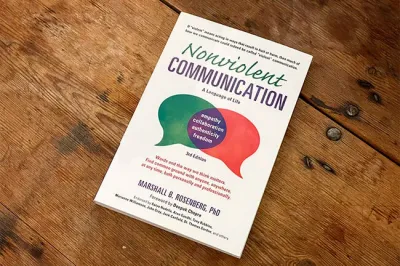
If you want to become someone people can truly open up to, read “Nonviolent Communication: A Language of Life” by Marshall B. Rosenberg. It teaches you how to listen deeply, speak with empathy, and build real, meaningful connections — even in the hardest conversations.
Disclaimer: We earn a small commission from qualifying purchases at no additional cost to you.